Lesson Focus
This lesson serves as the foundation for the three-week storytelling project. Students are introduced to The Very Hungry Caterpillar through interactive storytelling, vocabulary exploration, and guided speaking activities. The lesson prepares learners for later drama, voice training, and audio recording tasks by building familiarity with the story and its language. (Few of the planned tasks can be optional or alterable as per convenience and available resources.)
Language Learning Objectives
By the end of the lesson, students will be able to identify and use key vocabulary from the story, understand the basic story sequence (beginning, middle and end), practise pronunciation of new words, and respond to simple comprehension questions through guided speaking.
Skills Developed
Listening comprehension
Spoken interaction
Vocabulary recall
Cooperative group work
Cultural Awarenes
Students are introduced to The Very Hungry Caterpillar as a classic children’s book widely used in English-speaking countries. Through the story, they explore how food, nature and storytelling are presented in English children’s literature.
Materials Used
The Very Hungry Caterpillar (book or visual slides)
Flashcards (fruits, foods, days of the week)
Caterpillar and butterfly visuals
Projector or mini whiteboard
Group section cards (1–5)
Simplified scripts for group reading
Optional matching worksheets
Lesson Procedure
Warm-Up (5 Minutes)
The language assistant begins by showing a picture of a caterpillar and asking guiding questions such as:
What animal is this?
What colour is it?
What do you think will happen in the story?
Students are encouraged to predict the story and activate prior knowledge.
Story Reading (10 Minutes)
The story is read aloud expressively by the language assistant using gestures, pauses and visuals. Students repeat selected vocabulary words and phrases to practise pronunciation and rhythm.
Vocabulary Activities (10 Minutes)
Key vocabulary is introduced using flashcards and visuals. This includes fruits, food items, days of the week and nature-related words. Interactive games such as “Listen and Repeat,” “Guess the Card,” and “What’s Missing?” help reinforce meaning and recall.
Story Sequence Understanding (5 Minutes)
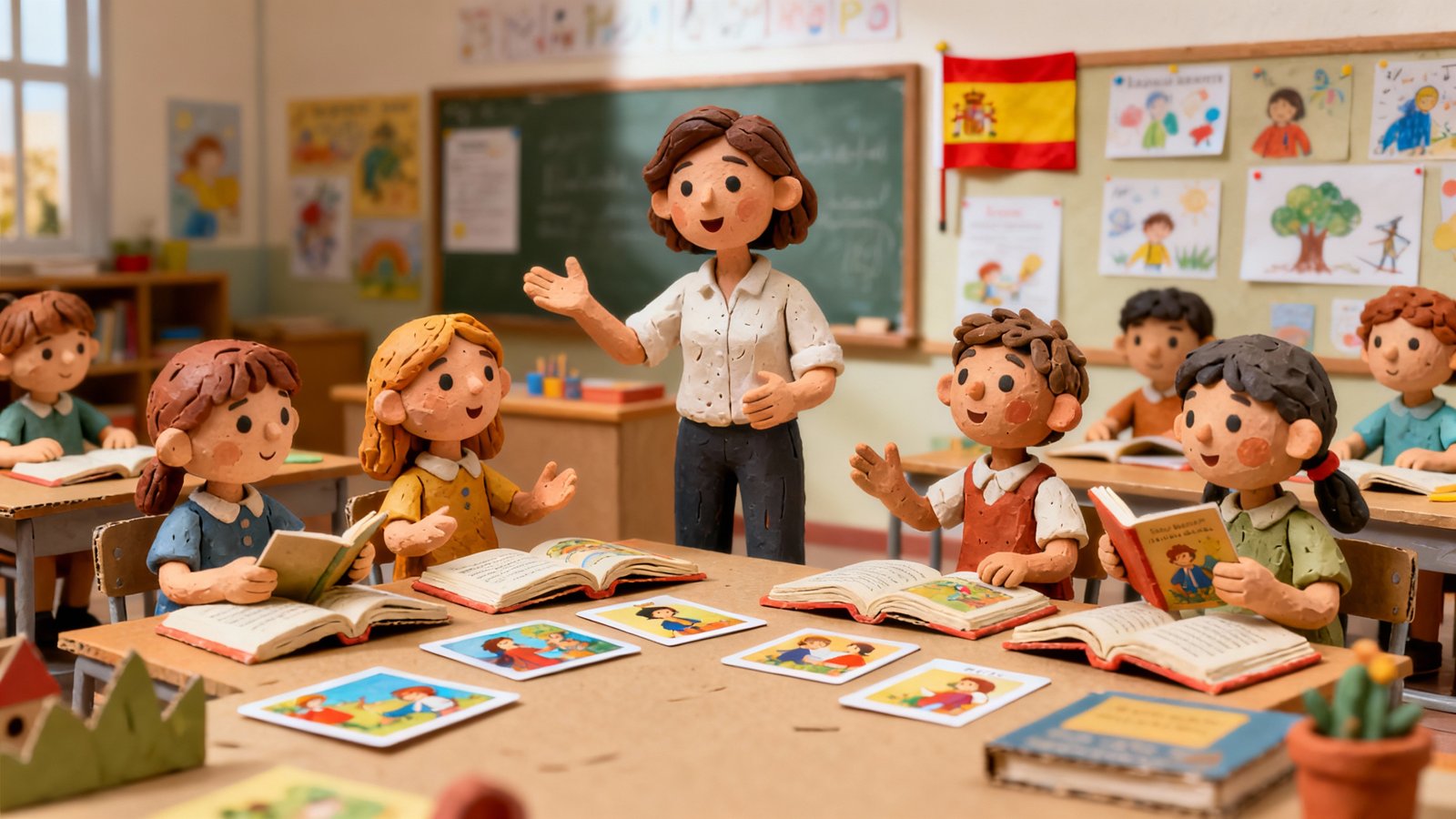
Students help arrange story images in the correct order. Comprehension questions are used to check understanding, such as What happened first? or What did the caterpillar eat on Tuesday?
Group Formation (5 Minutes)
The class is divided into five groups, each assigned a different part of the story. Groups receive simplified scripts corresponding to their section of the narrative.
Group Practice (10 Minutes)
Students practise reading their scripts together. The language assistant supports pronunciation, fluency and expression, encouraging students to read with emotion such as excitement, hunger or surprise.
Assessment
Assessment is formative and ongoing. Student participation, vocabulary use, comprehension and collaboration are observed throughout the lesson. Oral questions and group interaction provide immediate feedback on learning progress.
Expected Outcome of the Lesson
By the end of this lesson, students will understand the story, recognise key vocabulary, be organised into working groups, and feel motivated to continue with rehearsals and recording in the following sessions.